
Job Opportunities in Germany after MBA
Table of Contents
- Top Job Opportunities in Germany after MBA
- MBA Salary in Germany After Graduation
- Highest Paying Job Opportunities after MBA in Germany
- Top Industries Offering MBA Jobs in Germany
- Best Cities for Job Opportunities in Germany after MBA
- Work Visa Options After MBA in Germany
- Skills Required for MBA Jobs in Germany
- How to Find Job Opportunities in Germany after MBA
- Conclusion
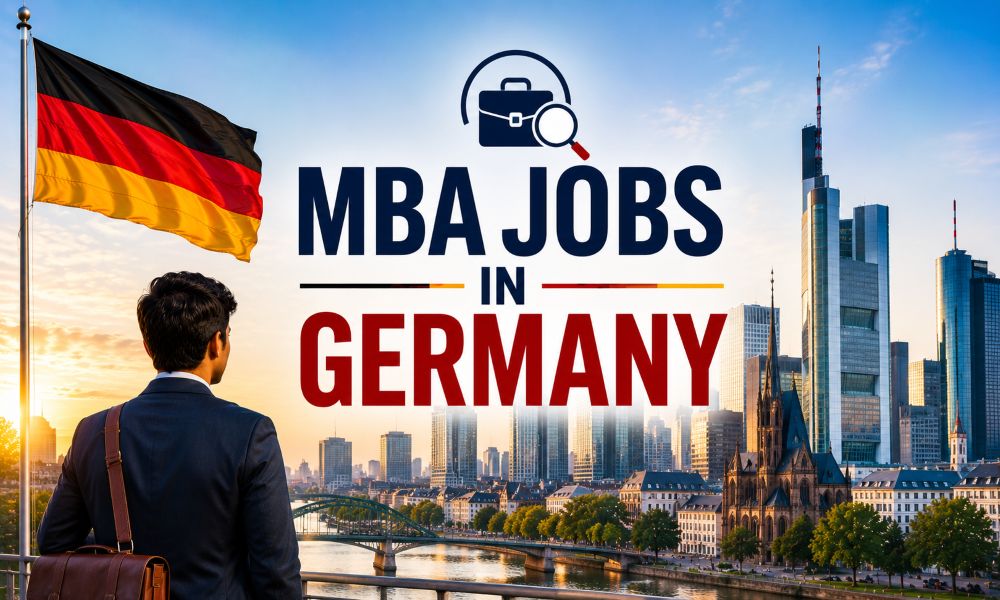
Job Opportunities in Germany after MBA are supported by Germany’s robust economy, which recruits MBA graduates for strategic roles like management consulting, corporate finance, and tech product management. Salaries for these roles may range from €70,000 to €120,000/year (≈ ₹78.83 L–₹1.35 Cr./year), depending on experience, company, and city. Key cities like Berlin, Frankfurt, and Munich serve as major hubs for these business opportunities.
It is a practical option for MBA graduates with relevant experience and strong business skills. Salaries vary by role, experience, language skills, and industry. Top hiring sectors include automotive giants (BMW, Volkswagen) and global tech firms (SAP, Amazon).
The table below gives a quick overview of Job Opportunities in Germany after MBA:-
Key Point | Details | Approx. Value |
Popular Career Areas | Consulting, finance, product, operations, business development | Role-based hiring |
Top Hiring Cities | Berlin, Munich, Frankfurt, Hamburg, Stuttgart, Düsseldorf | Industry-specific hubs |
Common Roles | Consultant, Product Manager, Finance Manager, Operations Manager | MBA-level roles |
Salary Scope | Depends on role, city, company, and experience | €53,756–€128,200/year (≈ ₹60.21 L–₹1.44 Cr./year) |
Job Search Residence Permit | For eligible graduates of German universities | Up to 18 months |
EU Blue Card Standard Threshold 2026 | Standard salary requirement | €50,700/year (≈ ₹56.78 L/year) |
EU Blue Card Lower Threshold 2026 | Shortage occupations / young professionals | €45,934.20/year (≈ ₹51.45 L/year) |
Useful Skills | German language, analytics, leadership, strategy | Improves job access |
Note: This article covers MBA Jobs in Germany, role-wise salaries, hiring sectors, top cities, work visa options, EU Blue Card rules, skills required, challenges, and job-search tips for international students.
Top Job Opportunities in Germany after MBA
Top Job Opportunities in Germany after MBA depend on specialisation, previous work experience, language skills, and industry fit. Consulting, finance, product management, operations, and business development are common routes for MBA graduates who want business-facing roles in Germany.
Management Consultant
Management consulting is a popular MBA career path in Germany. Consultants work with companies on business strategy, growth planning, market entry, transformation, cost improvement, and process changes. This role suits students with strong problem-solving, communication, presentation, and case interview skills.
The table below highlights management consulting roles after MBA in Germany:-
Role Detail | What It Means | Career Value |
Common Employers | Consulting firms, boutique consultancies, in-house strategy teams | Strong learning and exposure |
Skills Needed | Problem-solving, strategy, communication, analytics | High-value MBA skills |
Best Cities | Munich, Berlin, Frankfurt, Düsseldorf, Hamburg | Strong consulting presence |
Approx. Salary | €63,000–€85,000/year | ≈ ₹70.56–₹95.20 L/year |
Top Earner Level | Up to €119,600/year | ≈ ₹1.34 Cr./year |
Source: Glassdoor
Product Manager
Product management is suitable for MBA graduates with technology, business, analytics, or startup experience. Product managers work with engineering, design, sales, marketing, and leadership teams to improve products and support business growth.
The table below highlights product management scope in Germany:-
Role Detail | What It Means | Career Value |
Common Industries | SaaS, fintech, e-commerce, automotive tech | Good for tech-business profiles |
Skills Needed | Product strategy, analytics, user research, stakeholder management | Useful for leadership growth |
Best Cities | Berlin, Munich, Hamburg, Stuttgart | Strong tech and startup ecosystem |
Approx. Salary | €53,756–€83,050/year | ≈ ₹60.21–₹93.02 L/year |
Top Earner Level | Up to €95,400/year | ≈ ₹1.06 Cr./year |
Source: Glassdoor
Finance Manager
Finance roles are suitable for MBA graduates with experience in accounting, banking, investment, fintech, corporate finance, risk, or business planning. These roles usually require strong financial modelling, budgeting, reporting, compliance, and stakeholder management skills.
The table below highlights finance career details after MBA in Germany:-
Role Detail | What It Means | Career Value |
Common Roles | Finance Manager, FP&A Manager, Risk Analyst | Strong salary and stability |
Skills Needed | Financial modelling, budgeting, risk, compliance | Important for finance careers |
Best Cities | Frankfurt, Munich, Berlin, Hamburg | Strong finance and corporate base |
Approx. Salary | €61,750–€101,250/year | ≈ ₹69.16 L–₹1.13 Cr./year |
Top Earner Level | Up to €128,200/year | ≈ ₹1.44 Cr./year |
Source: Glassdoor
Operations and Supply Chain Manager
Germany has a strong base in manufacturing, automotive, engineering, logistics, and industrial production. Operations and supply chain roles can suit MBA graduates with experience in process improvement, procurement, logistics, manufacturing, analytics, or engineering-led business roles.
The table below highlights operations and supply chain roles after MBA:-
Role Detail | What It Means | Career Value |
Common Industries | Automotive, manufacturing, logistics, engineering | Strong German market fit |
Skills Needed | Lean operations, procurement, ERP, analytics | Useful for industrial roles |
Best Cities | Stuttgart, Munich, Hamburg, Frankfurt | Strong industrial and logistics base |
Approx. Salary | €53,226–€95,000/year | ≈ ₹59.61 L–₹1.06 Cr./year |
Role Fit | Best for engineering, logistics, and operations profiles | Practical MBA career path |
Source: Glassdoor
MBA Salary in Germany After Graduation
MBA salary in Germany varies by role, city, employer, work experience, German language level, and specialisation. Students should compare salary role-wise because consulting, finance, product, and business development roles can have different salary ranges.
The table below shows estimated salaries for popular MBA-related roles in Germany:-
Job Role | Approx. Salary in Germany | Approx. INR Value |
Product Manager | €53,756–€83,050/year | ≈ ₹60.21–₹93.02 L/year |
Finance Manager | €61,750–€101,250/year | ≈ ₹69.16 L–₹1.13 Cr./year |
Management Consultant | €63,000–€85,000/year | ≈ ₹70.56–₹95.20 L/year |
Business Consultant | €57,075–€72,250/year | ≈ ₹63.92–₹80.92 L/year |
Business Development Manager | €60,628–€105,250/year | ≈ ₹67.90 L–₹1.17 Cr./year |
Source: Glassdoor
Highest Paying Job Opportunities after MBA in Germany
Highest paying Job Opportunities after MBA in Germany are usually found in consulting, product management, finance, senior business development, and technology-led management roles. These roles often need prior experience, industry knowledge, leadership ability, and strong communication skills.
High-Paying MBA Roles by Function
High-paying MBA roles are usually linked with strong pre-MBA experience. Students with consulting, finance, engineering, product, analytics, or sales strategy backgrounds may find better role alignment in Germany.
The table below shows high-paying MBA career paths in Germany:-
Function | Common High-Paying Roles | Approx. Salary Range |
Consulting | Management Consultant, Strategy Consultant | €63,000–€119,600/year (≈ ₹70.56 L–₹1.34 Cr./year) |
Product | Product Manager, Senior Product Manager | €53,756–€100,000/year (≈ ₹60.21 L–₹1.12 Cr./year) |
Finance | Finance Manager, FP&A Manager, Risk Manager | €61,750–€128,200/year (≈ ₹69.16 L–₹1.44 Cr./year) |
Business Consulting | Business Consultant, Senior Consultant | €57,075–€89,860/year (≈ ₹63.92 L–₹1.01 Cr./year) |
Business Development | Partnerships Manager, Sales Strategy Manager | €60,628–€105,250/year (≈ ₹67.90 L–₹1.17 Cr./year) |
Source: Glassdoor
Specialisation-Wise Job Opportunities in Germany after MBA
MBA specialisation helps students choose the right job route. Finance, analytics, operations, international business, marketing, and product-focused MBA tracks can support different career paths in Germany.
The table below shows specialisation-wise job options:-
MBA Specialisation | Common Job Roles | Best Industry Fit |
Finance | Finance Manager, Risk Analyst, FP&A Manager | Banking, fintech, corporate finance |
Marketing | Brand Manager, Growth Manager, Digital Marketing Manager | FMCG, e-commerce, tech |
Business Analytics | Business Analyst, Strategy Analyst, Product Analyst | Tech, consulting, finance |
Operations | Supply Chain Manager, Operations Manager | Automotive, logistics, manufacturing |
International Business | Business Development Manager, Export Manager | Trade, logistics, global firms |
Top Industries Offering MBA Jobs in Germany
Germany has a strong base in automotive, engineering, manufacturing, finance, technology, consulting, logistics, and healthcare. MBA graduates can find roles in traditional companies, multinational firms, startups, and business service teams.
The table below highlights industries that commonly hire MBA graduates in Germany:-
Industry | Why It Hires MBA Graduates | Common Roles |
Consulting | Business transformation and strategy demand | Consultant, Strategy Analyst |
Automotive | Germany has a strong industrial and automotive base | Product, Operations, Supply Chain |
Finance | Frankfurt is a major finance hub | Finance Manager, Risk Analyst |
Technology | Product and business roles support digital growth | Product Manager, Business Analyst |
Logistics | Germany is central to European trade | Supply Chain Manager |
Healthcare and Pharma | Business, operations, and strategy needs | Strategy, Operations, Product |
Best Cities for Job Opportunities in Germany after MBA
The best city for MBA careers in Germany depends on the target industry. Berlin, Munich, Frankfurt, Hamburg, Stuttgart, and Düsseldorf are among the most common business locations for international graduates.
The table below shows popular German cities for MBA careers:-
City | Best For | Career Advantage |
Berlin | Startups, product, technology, marketing | English-friendly job market |
Munich | Consulting, tech, automotive, management | Strong corporate presence |
Frankfurt | Banking, finance, fintech, consulting | Germany’s financial hub |
Hamburg | Logistics, media, trade, consulting | Strong port and business ecosystem |
Stuttgart | Automotive, manufacturing, engineering | Strong industrial base |
Düsseldorf | Consulting, telecom, consumer goods | Good business network |
Work Visa Options After MBA in Germany
International students who complete a degree in Germany can apply for a residence permit to search for qualified employment. After getting a suitable job, graduates may move to a work residence permit or EU Blue Card depending on salary, role, and eligibility.
18-Month Residence Permit After Graduation
Non-EU graduates of German universities can apply for a residence permit to search for qualified employment after completing studies in Germany. During this period, they may take up any type of job while looking for suitable qualified employment.
The table below explains key points about the 18-month job-search residence permit:-
Requirement | What It Means | Important Point |
German Degree Completion | You must complete studies in Germany | Degree proof is needed |
Health Insurance | Valid coverage is required | Must be maintained |
Financial Support | You must support yourself | Check local authority rules |
Duration | Job search period | Up to 18 months |
Work During Search | Any type of job allowed | Useful for financial support |
EU Blue Card Salary Requirement in Germany
The EU Blue Card is a common route for highly qualified professionals in Germany. MBA graduates can consider this route if their role, salary, and qualification match the official requirements.
The table below explains EU Blue Card salary thresholds:-
Visa Route | Salary Requirement | Approx. INR Value |
EU Blue Card Standard | €50,700/year | ≈ ₹56.78 L/year |
Shortage Occupations | €45,934.20/year | ≈ ₹51.45 L/year |
Young Professionals | €45,934.20/year | ≈ ₹51.45 L/year |
Skills Required for MBA Jobs in Germany
MBA Jobs in Germany require more than a degree. Employers look for business analysis, leadership, communication, data skills, industry understanding, and practical experience. German language is not mandatory for every role, but it can improve access to local-market jobs.
The table below shows useful skills for MBA graduates in Germany:-
Skill Area | Why It Matters | Useful For |
German Language | Improves local job access | Consulting, HR, operations, finance |
Data and Analytics | Supports business decisions | Product, strategy, finance |
Leadership | Needed for MBA-level roles | Management and team roles |
Communication | Helps in interviews and stakeholder work | Consulting and business development |
Industry Knowledge | Shows job readiness | Automotive, finance, tech, logistics |
Networking | Helps access hidden job market | All MBA careers |
How to Find Job Opportunities in Germany after MBA
Finding Job Opportunities in Germany after MBA requires early planning. Students should build a German-style CV, update LinkedIn, attend career events, connect with alumni, and prepare for role-specific interviews before graduation.
The table below shows practical steps to find MBA jobs in Germany:-
Step | What to Do | Why It Helps |
1. Shortlist Roles | Choose roles based on specialisation and experience | Builds a focused search |
2. Prepare CV | Use a German-style CV format | Matches employer expectations |
3. Build LinkedIn | Add skills, projects, internships, and MBA profile | Helps recruiters find you |
4. Use Job Portals | Apply through company websites, LinkedIn, StepStone, and official portals | Expands job reach |
5. Network Early | Connect with alumni, recruiters, and industry professionals | Helps access referrals |
6. Prepare Interviews | Practise case, behavioural, and role-specific rounds | Improves conversion |
7. Track Visa Timeline | Know residence permit and Blue Card rules | Avoids last-minute issues |
Conclusion
Job Opportunities in Germany after MBA can be strong for students targeting consulting, finance, product management, technology, operations, and business development roles.
Germany offers career scope across major business cities and provides post-study work options for eligible graduates of German universities. However, job outcomes depend on work experience, German language ability, practical skills, networking, salary eligibility, and market conditions.
Planning to study MBA in Germany? Speak with our study abroad experts for personalised guidance and build the right MBA and career strategy.