MBA Jobs in Germany
Table of Contents
- MBA Jobs in Germany After Graduation
- MBA Job Opportunities in Germany
- Best Cities for MBA Careers
- MBA Jobs Salary in Germany
- Skills That Improve Your Employability
- Top Recruiters Offering MBA Jobs in Germany
- Work Visa and PR After MBA Jobs in Germany
- How to Get MBA Jobs in Germany
- Author's Final Thoughts
Germany, one of Europe's strongest destinations for MBA graduates for it’s stable economy, innovation-driven industries and globally recognized multinational companies. If you're planning to pursue MBA abroad, understanding MBA jobs in Germany is just as important as selecting the right university. From consulting and corporate finance to product management, supply chain, and business analytics, MBA graduates are recruited across industries with starting salaries ranging between €70,000 and €130,000 annually (Approx. ₹70 lakh–₹1.3 crore).
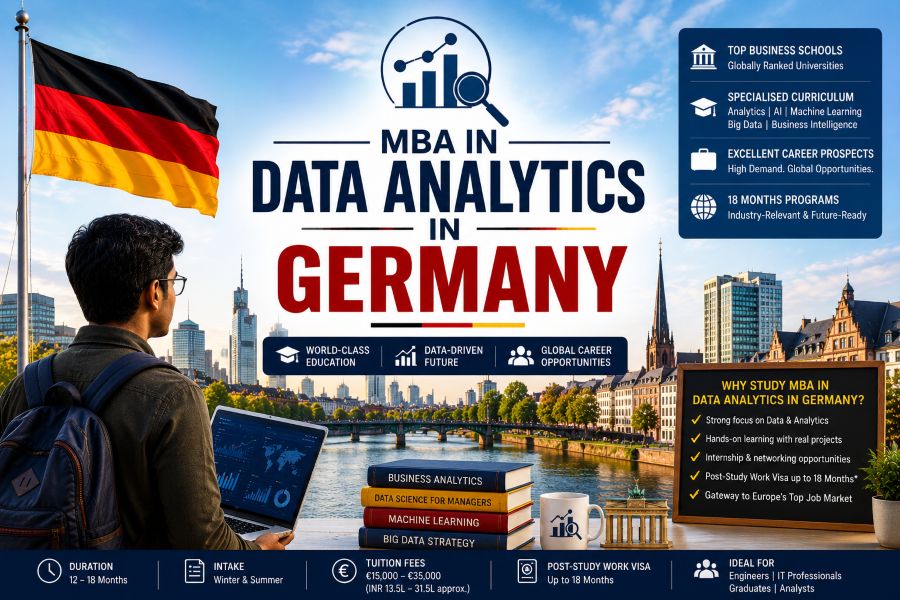
For Indian professionals, Germany offers more than just attractive salaries. The country provides structured career progression, an 18-month post-study work visa, and long-term pathways towards permanent residency. While many MBA programmes are taught in English, employers often prefer candidates with B2/C1 German language proficiency, especially for leadership and client-facing positions.
Key Highlights: MBA Jobs in Germany
Particular | Details |
Average Starting Salary | €70,000–€130,000 annually (Approx. ₹70 lakh–₹1.3 crore) |
Highest Paying Industry | Management Consulting |
Top Employers | BMW, SAP, Bosch, Deutsche Bank, Siemens, Allianz |
Post-study Work Visa | 18 months |
Permanent Residency | Possible after qualifying employment |
Preferred German Level | B2–C1 |
Top Hiring Cities | Munich, Berlin, Frankfurt, Stuttgart, Hamburg |
Most Popular Roles | Consultant, Product Manager, Financial Analyst, Operations Manager |
This guide explores MBA jobs in Germany, MBA job opportunities in Germany, salaries, recruiters and work permit information to maximize your return on investment before choosing Germany as your MBA destination.
MBA Jobs in Germany After Graduation
MBA from Germany opens doors to a wide range of leadership and strategic roles across multiple industries. Companies value MBA graduates for their analytical thinking, management capabilities and international business exposure. The availability of MBA jobs in Germany increases as businesses expand digital transformation, sustainability initiatives and global operations.
Demand for MBA Graduates
Germany's strong industrial base creates opportunities for professionals from engineering, business, finance, IT and operations backgrounds. Organizations actively seek MBA graduates capable of solving business challenges, managing teams and driving innovation across departments.
The sectors below consistently recruit MBA graduates throughout the year.
Industry | Demand Level | Typical Hiring Focus |
Consulting | Very High | Strategy, Operations, Digital Transformation |
Banking & Finance | Very High | Corporate Finance, Risk, Investment, Commercial Banking |
Automotive | High | Supply Chain, Operations, Business Development |
Technology | High | Product Management, Business Intelligence, AI Strategy |
Manufacturing | High | Operations Excellence, Procurement, Project Management |
Logistics | High | Supply Chain, Procurement, Global Operations |
Healthcare | Moderate | Healthcare Consulting, Hospital Administration |
Renewable Energy | Growing | Sustainability, Business Strategy |
MBA Job Opportunities in Germany
Pursuing MBA in Germany comes with diverse career paths after graduation. Whether your goal is consulting, corporate leadership, finance, marketing or technology management, MBA job opportunities in Germany span almost every major business sector.
Top Industries Offering MBA Job Opportunities in Germany
Different industries offer varying salary ranges, work cultures and growth prospects. Understanding where your MBA specialization fits can help you make better academic and career decisions.
The table below highlights some of the highest-paying industries.
Industry | Common Roles | Average Annual Salary |
Management Consulting | Consultant, Strategy Consultant | €80,000–€140,000 (Approx. ₹80 lakh–₹1.4 crore) |
Corporate Finance | Finance Manager, Investment Analyst | €85,000–€130,000 (Approx. ₹85 lakh–₹1.3 crore) |
Technology | Product Manager, AI Business Lead | €75,000–€115,000 (Approx. ₹75 lakh–₹1.15 crore) |
Supply Chain | Operations Manager, Procurement Lead | €70,000–€105,000 (Approx. ₹70 lakh–₹1.05 crore) |
Marketing | Brand Manager, Growth Manager | €65,000–€100,000 (Approx. ₹65 lakh–₹1 crore) |
Manufacturing | Plant Strategy, Business Excellence | €70,000–€110,000 (Approx. ₹70 lakh–₹1.1 crore) |
Consulting and finance are among the highest-paying sectors for MBA graduates in Germany.
Best Cities for MBA Careers
Career opportunities also depend on where you choose to work after graduation. Germany's largest business hubs attract multinational corporations, startups and global consulting firms, creating excellent opportunities for MBA professionals.
The comparison below highlights strongest employment markets:
City | Major Industries | Leading Employers |
Munich | Automotive, Technology, Finance | BMW, Allianz, Siemens, Microsoft |
Berlin | Startups, FinTech, Consulting | Zalando, Delivery Hero, SAP |
Frankfurt | Banking, Consulting, Finance | Deutsche Bank, Commerzbank, KPMG |
Automotive, Manufacturing | Mercedes-Benz, Bosch, Porsche | |
Hamburg | Logistics, Aviation, Retail | Airbus, Otto Group |
Media, FMCG, Consulting | RTL Group, REWE |
For Indian graduates seeking international exposure, Munich, Berlin, and Frankfurt generally offer the largest concentration of high-paying MBA job opportunities in Germany.
MBA Jobs Salary in Germany
Salary remains one of the biggest reasons students choose Germany for management education. While compensation varies by business school, industry, location and experience, MBA jobs salary in Germany are competitive compared with many other European destinations. In addition to base pay, many employers also provide annual bonuses, relocation benefits and performance incentives.
Average Salary by MBA Job Role
Different MBA specializations lead to different earning potential. Strategic and analytical roles generally offer the highest compensation.
The table below provides approximate salary ranges for popular MBA careers.
Job Role | Average Annual Salary |
Management Consultant | €90,000–€140,000 (Approx. ₹90 lakh–₹1.4 crore) |
Product Manager | €80,000–€120,000 (Approx. ₹80 lakh–₹1.2 crore) |
Financial Analyst | €75,000–€110,000 (Approx. ₹75 lakh–₹1.1 crore) |
Investment Banking Associate | €95,000–€130,000 (Approx. ₹95 lakh–₹1.3 crore) |
Operations Manager | €70,000–€105,000 (Approx. ₹70 lakh–₹1.05 crore) |
Supply Chain Manager | €72,000–€110,000 (Approx. ₹72 lakh–₹1.1 crore) |
Marketing Manager | €68,000–€100,000 (Approx. ₹68 lakh–₹1 crore) |
HR Business Partner | €65,000–€95,000 (Approx. ₹65 lakh–₹95 lakh) |
Graduates from highly ranked institutions with relevant work experience often secure packages above these averages.
MBA Salary by Experience
Experience plays a significant role in determining salary growth. Professionals with strong leadership capabilities and specialized expertise generally progress faster into senior management positions.
The table below illustrates estimated MBA salary in Germany progression:
Experience Level | Average Annual Salary |
Fresh MBA Graduate | €70,000–€85,000 (Approx. ₹70 lakh–₹85 lakh) |
3–5 Years | €90,000–€120,000 (Approx. ₹90 lakh–₹1.2 crore) |
5–10 Years | €120,000–€160,000 (Approx. ₹1.2–₹1.6 crore) |
Senior Leadership | €180,000+ (Approx. ₹1.8 crore+) |
Professionals who combine an MBA with industry certifications, technical expertise and German language proficiency often experience faster salary progression.
Skills That Improve Your Employability
Beyond MBA degree, employers assess practical skills that demonstrate your ability to solve business problems and lead teams. Developing these competencies during your MBA significantly improves your chances of securing job opportunities after MBA in Germany.
The table below highlights the most valuable skills.
Skill | Why It Matters |
German Language (B2–C1) | Essential for client-facing and leadership roles |
SAP ERP | Widely used across German industries |
SQL & Data Analytics | Valuable for consulting and business intelligence |
Power BI / Tableau | Business reporting and analytics |
Agile Project Management | Common across technology firms |
Lean Six Sigma | Preferred in manufacturing and operations |
Financial Modelling | Important for finance and consulting |
Leadership & Communication | Critical for managerial positions |
While English can help you secure an initial role, learning German substantially expands your long-term career opportunities and promotion prospects.
Top Recruiters Offering MBA Jobs in Germany
Germany hosts some of the world's most respected multinational corporations, offering excellent career progression, international exposure and competitive compensation. These companies actively recruit MBA graduates for leadership, consulting, operations and strategic management positions.
The table below highlights some of the leading recruiters.
Employer | Sector | Popular MBA Roles |
BMW Group | Automotive | Business Strategy, Supply Chain |
Siemens | Engineering | Operations, Digital Transformation |
SAP | Technology | Product Manager, Business Consultant |
Deutsche Bank | Banking | Corporate Finance, Investment Banking |
Bosch | Manufacturing | Procurement, Operations Excellence |
Allianz | Insurance | Business Strategy, Risk Management |
KPMG Germany | Consulting | Management Consulting |
Deloitte Germany | Consulting | Strategy & Business Advisory |
PwC Germany | Consulting | Finance Consulting |
Accenture | Technology Consulting | Digital Strategy |
Many recruiters also offer structured graduate leadership programmes specifically designed for MBA graduates.
Work Visa and PR After MBA Jobs in Germany
Germany provides a well-defined pathway that allows international graduates to remain in the country after completing their studies. This is one of the biggest reasons why MBA jobs in Germany continue to attract Indian students looking for long-term international careers.
Post-Study Work Visa
After graduation, students receive time to search for employment related to their qualifications. Graduates should begin networking and applying for positions well before completing their MBA to maximize this opportunity.
The table below summarizes the process.
Stage | Details |
Job Search Visa | Up to 18 months |
Eligible Employment | Related to qualification |
EU Blue Card | Available after meeting salary requirements |
Family Reunification | Possible after employment |
Permanent Residence | Usually after 21–27 months under the EU Blue Card route (subject to German language proficiency and current regulations) |
Permanent Residency Pathway
Germany's strongest advantages is its relatively structured route towards long-term residence. Graduates who secure skilled employment and meet salary, tax, and residency requirements may later become eligible for permanent residence. Those holding an EU Blue Card may qualify sooner if they demonstrate the required German language proficiency.
How to Get MBA Jobs in Germany
Finding employment requires more than simply uploading a CV online. Students who begin preparing during their MBA often secure interviews before graduation. Building professional networks, gaining internship experience, and tailoring applications to German employers can dramatically improve outcomes.
Following a structured approach increases your chances of securing quality MBA job opportunities in Germany:
Step | Action |
1 | Optimise your LinkedIn profile |
2 | Build a German-style CV |
3 | Attend university career fairs |
4 | Apply through company career portals |
5 | Use Glassdoor Germany and Indeed Germany |
6 | Network with alumni |
7 | Complete internships or consulting projects |
8 | Practice behavioral interviews |
9 | Improve German language proficiency |
University career services remain one of the most valuable yet underutilized resources for international students.
Author's Final Thoughts
Choosing Germany for your MBA is about building a sustainable international career. The country offers outstanding salaries, access to multinational employers and one of Europe's strongest economies. However, if you truly want to maximize MBA jobs in Germany, don't rely solely on classroom learning. Build industry-specific skills, pursue internships, attend networking events and start learning German as early as possible.
As an advisor, I'd encourage you to look beyond rankings alone. Select a programme that aligns with your career goals, offers strong corporate partnerships and provides practical exposure through projects or internships. Germany rewards professionals who prepare strategically, and with the right combination of experience, networking, and language skills, you can build a highly rewarding global career.
Book a free 1:1 counselling session with our study abroad experts today to know more.