MBA in Leipzig
Table of Contents
- Why choose MBA in Leipzig for Indian Students in 2026
- Top colleges for Masters in MBA in Leipzig
- Year-wise Curriculum for MBA in Leipzig
- Eligibility Requirements (Academic & Work)
- Semester Date & Academic calendar for MBA in Leipzig
- How to Apply for MBA in Leipzig
- Cost of Living: Accommodation, Rent, Food & Other Essential
- Career Opportunities After completing MBA in Leipzig
- Conclusion
Leipzig offers excellent opportunities for Indian students seeking an MBA in Germany in 2026, primarily through two distinct English-taught programs. HHL Leipzig Graduate School of Management is a highly selective, AACSB accredited private school. It focuses on General Management, Entrepreneurship, and Corporate Finance, with tuition fees starting at €42,500 (INR 4,575,550). Leipzig University (SEPT Competence Center) offers a specialized public-track MBA. It is tailored specifically toward international Small & Medium-Sized Enterprise (SME) Development and costs €6,000 (INR 645,960).
The following table highlights the core features and approximate values associated with studying in Leipzig.
Key Highlight | Details | Approximate Value |
Study Destination | Leipzig, Germany | High ROI, affordable living |
Top Institutions | HHL Leipzig & Leipzig University | Public & Private Options |
Course Duration | Full-time enrollment | 15 to 24 months |
Average Tuition | Varies strictly by university type | €6,000 - €42,500 (₹6,45,960 - ₹4,575,550) |
Post-Study Visa | Granted automatically upon graduation | 18 Months duration |
Monthly Living Cost | Average student budget estimate | €985.60 (₹1,06,110) |
Language Needed | Taught completely in English | IELTS/TOEFL required |
Why choose MBA in Leipzig for Indian Students in 2026
Choosing Leipzig for your MBA means immersing yourself in a vibrant European tech hub. The city uniquely balances top-tier educational institutions with highly affordable living costs, providing unparalleled access to Germany’s powerful corporate and emerging startup ecosystems, ensuring a very high return on your educational investment.
Affordable Living: Leipzig offers significantly lower rent and living expenses compared to major cities like Munich or Berlin, maximizing your financial savings.
Startup Ecosystem: The city is a rapidly growing hub for deeptech, e-commerce, and venture capital, offering high-value networking events.
Academic Excellence: Institutions here are globally recognized, with programs like the SEPT MBA focusing explicitly on highly demanded SME growth strategies.
Strategic Location: Positioned as a central European logistics hub, it provides direct access to major multinational corporate headquarters.
English-Taught Degrees: Top universities offer full-time programs entirely in English, eliminating the immediate need for native German fluency to begin studying.
Top colleges for Masters in MBA in Leipzig
Leipzig features exceptional institutions for management studies, each catering to different professional aspirations. Whether you seek premium private education focusing on executive leadership or a public university dedicated to SME development, these excellent colleges offer globally recognized degrees that significantly boost your employability.
The table below contrasts the distinct focus areas of Leipzig's prominent business schools.
Institution Name | University Type | Primary Academic Focus |
HHL Leipzig | Private Business School | General Management & Finance |
Leipzig University | Public University (SEPT) | Small & Medium Enterprises |
Lancaster Univ. Leipzig | International Campus | Global Business Strategies |
IU International Univ. | Private Applied Sciences | Digital Marketing & Analytics |
Macromedia Univ. | Private Applied Sciences | Media & Data Management |
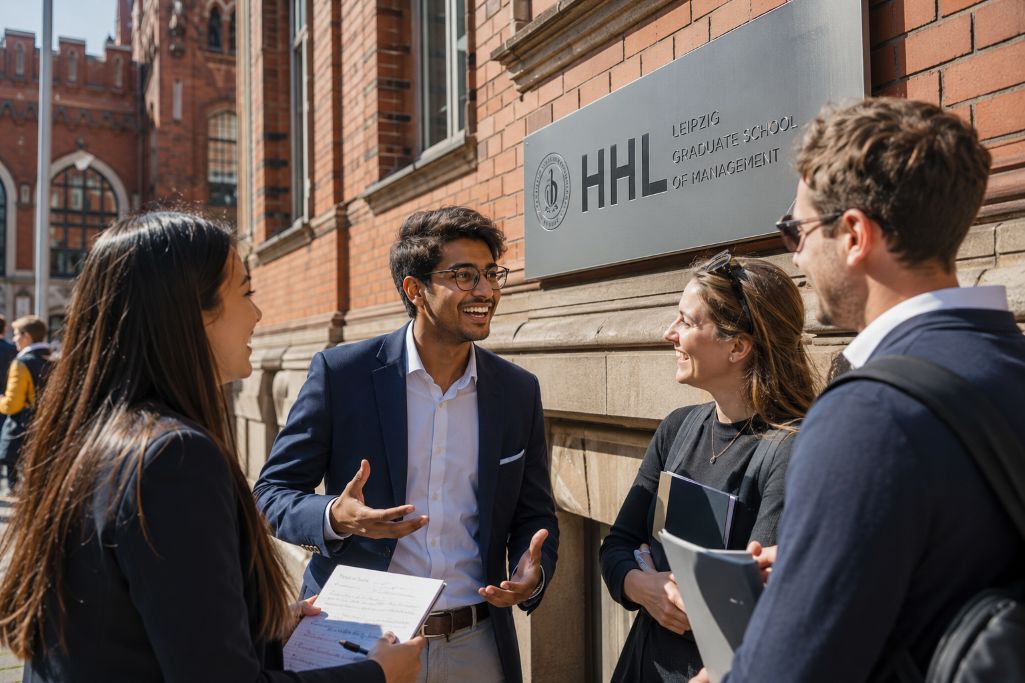
HHL Leipzig Graduate School of Management
This prestigious private institution offers a highly selective general management curriculum for aspiring global business leaders.
The following table details the core features of studying at HHL Leipzig.
Feature | Details | Key Benefit |
Academic Focus | General Management | Prepares for corporate leadership |
Degree Type | Private Full-Time MBA | Flexible 15-month track |
Global Accreditation | AACSB Accredited | High international recognition |
Estimated Tuition | €42,500 (₹4,575,550) | Premium but high ROI |
Career Outcomes | 90% hired within 6 months | Accelerated market entry |
Leipzig University (SEPT Competence Center)
This historic public university provides a specialized Master’s program tailored for international SME development.
The following table details the core features of studying at Leipzig University.
Feature | Details | Key Benefit |
Academic Focus | SME Promotion | Niche expertise for business growth |
Degree Type | Public Master of Arts | Highly subsidized education |
Program Duration | 24 months (4 semesters) | In-depth research opportunities |
Estimated Tuition | €6,000 (₹6,45,960) | Extremely affordable cost |
Scholarship Fit | DAAD EPOS Eligible | High chance for full funding |
Lancaster University Leipzig
This campus brings triple-accredited UK MBA excellence directly to the heart of Germany.
The following table details the core features of studying at Lancaster University Leipzig.
Feature | Details | Key Benefit |
Academic Focus | Global Strategies | Broad international perspective |
Degree Type | UK MBA Degree | Globally recognized qualification |
Program Duration | 12-month intensive | Quickest route to graduation |
English Requirement | High IELTS scores | Ensures strong communication |
Sustainability | Better World Ranked | Focus on responsible leadership |
IU International University of Applied Sciences
This modern university offers highly flexible, digitally driven MBA pathways for working professionals.
The following table details the core features of studying at IU International University.
Feature | Details | Key Benefit |
Academic Focus | Digital Analytics | Matches modern tech demands |
Degree Type | Private Flexible MBA | Potential for double degrees |
Program Duration | 12 to 24 months | Adapts to your schedule |
Study Format | Online or On-Campus | Maximum learning flexibility |
Admission Rate | Highly accessible | Streamlined entry requirements |
Macromedia University of Applied Sciences
This creative institution combines business administration with cutting-edge data analytics and marketing strategies.
The following table details the core features of studying at Macromedia University.
Feature | Details | Key Benefit |
Academic Focus | Media & Marketing | Ideal for tech-driven roles |
Degree Type | Master of Business | Practical industry approach |
Program Duration | 18 to 24 months | Ample time for internships |
Experience Needed | 2 years professional | Ensures a mature cohort |
Industry Ties | Strong media network | Excellent for creative careers |
Year-wise Curriculum for MBA in Leipzig
The academic structure of an MBA in Leipzig is rigorously designed to combine foundational business theories with intense practical applications. Students experience a progressive learning curve, transitioning from core management principles to specialized industry projects, real-world case studies, and advanced thesis research.
First Year Curriculum
The first year focuses intensely on establishing core management principles and foundational economic theories.
This table outlines the primary modules taught during the first academic year.
Semester Area | Key Modules Taught | Primary Learning Outcome |
Core Economics | Development Economics | Understanding global markets |
Management | Strategy & Accounting | Building corporate foundations |
Entrepreneurship | Business Model Design | Fostering startup mindsets |
Second Year Curriculum
The second-year shifts heavily towards specific electives, applied field research, and finalizing the Master's thesis.
This table outlines the advanced practical modules taught during the second academic year.
Semester Area | Key Modules Taught | Primary Learning Outcome |
Specialization | Innovation Management | Leading technical growth |
Practical Training | Field Research | Applying theories to real cases |
Final Thesis | Master's Colloquium | Independent data-driven research |
Eligibility Requirements (Academic & Work)
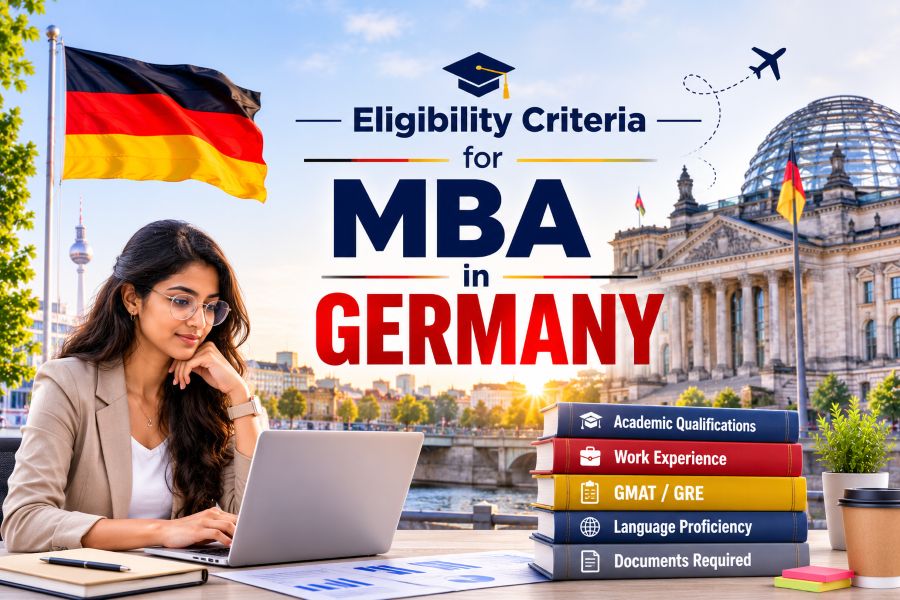
Securing admission into Leipzig’s competitive MBA programs requires meeting strict academic and professional criteria. Universities thoroughly evaluate your past undergraduate performance, language proficiency test scores, and relevant full-time work experience to ensure you are fully prepared for advanced business studies.
Academic Requirements
Ensuring your educational background meets strict German university standards is the critical first step for eligibility.
This table details the foundational academic benchmarks required for Indian applicants.
Academic Expectation | Detail Required | Impact on Admission |
Bachelor's Degree | Recognized undergraduate | Mandatory for all universities |
Credit Equivalency | Minimum 180 to 210 ECTS | Determines program eligibility |
Academic Grades | High GPA or equivalent | Crucial for competitive courses |
Verification | APS Certificate | Mandatory for Indian applicants |
Language Test | IELTS 6.5 or TOEFL 90 | Ensures strong communication |
Work Experience
German MBA programs strongly emphasize practical business acumen, making prior professional exposure an absolute necessity.
This table highlights the strict work experience conditions mandated by admissions committees.
Experience Criteria | Detail Required | Student Tip |
Minimum Duration | 2 years full-time | Mandatory across most programs |
Post-Graduation | Must be after bachelor's | Internships generally do not count |
Field Relevance | Management or SME | Highly preferred by admissions |
Evidence Required | Official employer letters | Must detail your exact daily roles |
Executive Track | 5+ years of senior roles | Needed for specialized EMBA pathways |
MBA in Leipzig's Tuition Fees for International Students
Understanding the financial commitment required for your MBA is essential for effective planning. Leipzig offers a diverse spectrum of tuition structures, ranging from highly affordable public university programs to premium, specialized tracks at private, internationally accredited business schools.
Public Universities are Highly Subsidized: Programs like the SEPT MBA only charge €1,500 (₹1,61,490) per semester, keeping total costs extremely low.
State Semester Fees: Even fully funded students must pay an administrative semester contribution of around €300 (₹32,298).
Private Universities Charge Premium Rates: Elite institutions like HHL charge full tuition, with programs starting at €42,500 (₹4,575,550).
Tuition Does Not Include Living Costs: You must independently fund your blocked account to cover daily personal expenses.
Flexible Payment Plans: Many private business schools offer monthly installment plans to help international students manage their cash flow.
Tuition fees at different colleges
Evaluating specific tuition rates helps you align your academic ambitions with your personal budget constraints. While public institutions utilize heavily subsidized models, private schools require full premium tuition payments to access their exclusive global networking opportunities and robust career services.
This table details the exact total tuition fees for Leipzig's distinct MBA programs.
College Name | Program Format | Estimated Total Fees |
HHL Leipzig | Private Full-Time MBA | €42,500 (₹4,575,550) |
Leipzig University | Public SEPT MBA | €6,000 (₹645,960) |
Lancaster U. Leipzig | Private Full-Time MBA | €25,000 (₹2,691,500) |
IU International U. | Private Flexible MBA | €15,000 (₹1,614,900) |
Macromedia Univ. | Private Specialized MBA | €18,000 (₹1,937,880) |
Semester Date & Academic calendar for MBA in Leipzig
German universities operate on a strict academic calendar that international applicants must navigate carefully. Missing crucial application windows can delay your studies by an entire year, making it absolutely vital to track intakes, specific start months, and required visa processing timelines.
Winter Semester Intake
The Winter Intake is the primary enrollment period for most German MBA programs.
This table outlines the crucial deadlines and start dates for the Winter Semester.
Milestone | Expected Timeline | Critical Action Required |
Application Deadline | March to May 31 | Submit all verified documents |
Visa Processing | June to August | Open a blocked account quickly |
Semester Start Date | September / October | Attend campus orientation weeks |
Summer Semester Intake
The Summer Intake offers a secondary enrollment window, typically utilized by specialized or private programs.
This table outlines the crucial deadlines and start dates for the Summer Semester.
Milestone | Expected Timeline | Critical Action Required |
Application Deadline | November to January | Ensure APS certificate is ready |
Visa Processing | December to February | Book embassy appointments early |
Semester Start Date | March / April | Prepare for immediate classes |
How to Apply for MBA in Leipzig
The application journey involves meticulous preparation, from organizing certified academic transcripts to passing rigorous admissions interviews. Following a structured timeline ensures you meet international requirements, clear university portals efficiently, and secure your German student visa without unnecessary stress.
This comprehensive table provides a detailed step-by-step application process for Indian students.
Step Number | Action Required | Key Timeline Focus |
1. Program Selection | Match career goals with university | 8 to 10 months prior |
2. APS Certificate | Verify Indian academic credentials | 6 months prior to deadline |
3. Transcript Check | Apply for VPD via Uni-assist | 4 to 5 months before deadline |
4. Test Preparation | Complete IELTS/TOEFL and GMAT | 3 to 4 months prior |
5. Online Submission | Upload CV, essays, and references | Submit before portal closes |
6. Interview Phase | Clear university panel interview | 2-4 weeks post-submission |
7. Blocked Account | Deposit mandatory living funds | Immediately after acceptance |
8. Visa Application | Apply for German student visa | 8 to 12 weeks before start date |
Cost of Living: Accommodation, Rent, Food & Other Essential
Leipzig is widely considered one of the most affordable major cities in Germany for international students. While managing your budget, it is absolutely critical to anticipate monthly expenses across rent, groceries, transportation, and daily utilities for effective, stress-free financial planning.
The table below breaks down common living expenses in Leipzig.
Expense Item | Estimated Cost in EUR | Estimated Cost in INR |
Single Person Cost (No Rent) | €985.60 | ₹1,06,110 |
1 Bedroom Rent (City Centre) | €697.58 | ₹75,101 |
Utilities (Electric, Heat, Water) | €305.90 | ₹32,933 |
Monthly Transport Pass | €63.00 | ₹6,783 |
Broadband Internet | €40.91 | ₹4,404 |
Mobile Phone Plan | €15.37 | ₹1,655 |
Restaurant Meal | €13.00 | ₹1,400 |
Source: Numbeo
Scholarships available
Securing financial aid is a highly effective way to offset tuition and living costs while studying in Germany.
The table below lists 5 valuable scholarships explicitly accessible to international students studying in Leipzig.
Scholarship Name | Sponsoring Body | Financial Coverage Provided |
DAAD EPOS | German Government | €934/month (₹100,554/month) |
KAAD Scholarship | Catholic Academic Exchange | Monthly living stipend |
HHL Early Bird | HHL Leipzig | Up to €6,000 (₹645,960) reduction |
Deutschlandstipendium | Public/Private Fund | €300/month (₹32,298/month) |
Women in Business | HHL Leipzig | Partial tuition fee waiver |
Career Opportunities After completing MBA in Leipzig
Graduating from a Leipzig business school dramatically accelerates your professional trajectory within the European market. The region’s booming economy provides abundant placements across various high-paying sectors, strongly favoring candidates with specialized skills in finance, digital strategy, supply chain, and consulting.
This table highlights 7 potential high-paying roles and 5 leading employers for MBA graduates.
Leading Employer | Job Role Offered | Approximate Annual Salary |
Porsche Leipzig | Supply Chain Director | €65,000 - €88,000 (₹6,997,900 - ₹9,474,080) |
Amazon Germany | Digital Marketing Manager | €55,000 - €75,000 (₹5,921,300 - ₹8,074,500) |
Roland Berger | Management Consultant | €70,000 - €95,000 (₹7,536,200 - ₹10,227,700) |
KPMG Germany | Financial Analyst | €65,000 - €85,000 (₹6,997,900 - ₹9,151,100) |
Earlybird VC | Venture Capital Associate | €60,000 - €90,000 (₹6,459,600 - ₹9,689,400) |
DHL Logistics | Operations Manager | €58,000 - €80,000 (₹6,244,280 - ₹8,612,800) |
BMW Group Leipzig | Corporate Strategist | €68,000 - €92,000 (₹7,320,880 - ₹9,904,720) |
Source: Glassdoor & LinkedIn Salary Insights
Conclusion
Graduating with an MBA from Leipzig in 2026 presents an extraordinary opportunity for international students aiming to accelerate their global careers. By choosing either the prestigious private tracks or specialized public programs, you secure a high-quality education at a highly competitive price point. The dynamic local market offers excellent pathways into various industries, supported by a remarkably affordable cost of living. Furthermore, Germany's generous eighteen-month post-study work visa provides ample time to transition smoothly into the European workforce. Ultimately, studying in Leipzig guarantees a phenomenal return on your educational investment, setting up a robust foundation for long-term professional success globally.
Ready to embark on your MBA journey in Leipzig? Connect with our experts to know about concerned universities, courses, scholarships, admissions, and career opportunities.